Reading a Vmware Ivrtual Machine With Virtual Box
VMware vs. Virtual Box: Comprehensive Comparison

Oracle and VMware are leaders in providing virtualization solutions in the mod IT industry. Oracle provides VirtualBox as a hypervisor for running virtual machines (VMs) while VMware provides multiple products for running VMs in different apply cases. Both platforms are fast, reliable, and include a wide array of interesting features. Some of these features are bachelor in both platforms, only there are also some features that are unique to each platform. The choice between VMware and Oracle VirtualBox virtualization solutions may be hard. If you are comparing VirtualBox to VMware, this blog post can help you to select the virtualization solution that meets your needs best.
Hypervisor Types of VMware'south and Oracle'due south Virtualization Products
Hypervisor is a special software product that can simultaneously run multiple virtual machines on a concrete machine. The VMs are logically isolated from each other and the underlying physical auto; this is due to the brainchild layer of a hypervisor that makes VMs contained from the hardware that is used by a physical machine. This setup enables one of the advantages of virtualization – like shooting fish in a barrel copying machines from 1 host to some other. Another do good is hardware resource redistribution betwixt VMs.
At that place are ii types of hypervisors: blazon 1 and type 2. A type 1 hypervisor is also chosen a native hypervisor, and tin run on bare metal by accessing the hardware directly. A blazon i hypervisor doesn't crave an underlying operating system (Os) because the hypervisor works as the operating system in this example. Using blazon one is optimal for big production environments.
A type 2 hypervisor runs on an existing host operating organization as an application. This type provides virtualization services past coordinating calls for CPU, retentivity, deejay, and other I/O (input/output) resource through the host Bone. Using a type ii hypervisor is convenient for users who desire to run a VM on their personal computers.
Oracle VirtualBox is a type 2 hypervisor and must be installed on the host Os every bit a software application.
VMware Player, Workstation, and Fusion are blazon 2 hypervisors, and must too be installed on the underlying host OS.
VMware ESXi is a type i hypervisor and must exist installed on bare metallic.
Data Protection with NAKIVO Backup & Replication
Keep your data safe and always bachelor with NAKIVO Backup & Replication, one of the leading VMware vSphere and Microsoft Hyper-5 fill-in solutions. Along with comprehensive VM backup, our solution ensures back up and protection for other well-known virtual, concrete, cloud and SaaS platforms without exceeding your IT upkeep.
Licensing Models
Oracle VirtualBox is a costless open source software product that is distributed nether the GNU General Public License, version 2 (GPLv2). The latest version of VirtualBox that is currently available (at the time of this blog post's creation) is VirtualBox 5.2.22.
VirtualBox Extension Pack is a airtight-source pack that adds some boosted features to the production including USB2.0/3.0 support, VirtualBox RDP, PXE Boot, VM disk encryption (must be installed on a host OS). VirtualBox Extension Pack is free for evaluation, personal use, or educational purposes (distributed nether the VirtualBox Extension Pack Personal Employ and Evaluation License). However, you should order an Enterprise license for commercial use.
VMware Role player (VMware Workstation Player is the total proper noun of the product) is costless for personal, educational, and non-commercial use. Business and non-profit organizations must obtain a commercial license (for nigh $150) that allows you lot to run Restricted VMs created in Workstation/Fusion, and provides meliorate support for mass deployments. Yous are able to quickly create (from v3.0) and easily run VMs with VMware Player.
VMware Workstation (VMware Workstation Pro is the total name of the product) has a 30-mean solar day trial period available for yous to evaluate the product. Mostly, you need to buy a license (VMware Workstation 15 Pro costs near $250). While VMware Role player only includes basic features, VMware Workstation includes a total set of virtualization features provided past VMware for desktops.
VMware Fusion is the equivalent of VMware Workstation for computers that have a macOS operating organization. At that place are two editions of VMware Fusion – VMware Fusion ($lxxx) and VMware Fusion Pro ($160). VMware Fusion Pro includes slightly more than enterprise-grade features as compared to VMware Fusion, which is primarily oriented towards home users.
VMware ESXi must be licensed with vSphere licenses, starting from $495 for VMware vSphere Essentials Kit. At that place is the evaluation period of 60 days for ESXi. Y'all tin can also get a free ESXi license for an unlimited fourth dimension menses, just with limited features: ESXi host cannot be managed with vCenter Server; ii physical CPUs (the number of CPU cores is unlimited); the number of vCPUs per a VM is eight.
Notation: The first version of VirtualBox (which is formerly known as Lord's day VirtualBox) was released in 2007 past Innotek GmbH. In 2007 Innotek was acquired past Sun Microsystems. In 2008 Sun Microsystems was acquired by Oracle, and since 2008 the production's proper name has been Oracle VirtualBox. The current version of VirtualBox is v.5.ii.22.
The first version of VMware was released in 1999. The full proper name of the product was VMware 1.0. Later, with the release of the third version in 2003, the product was renamed VMware Workstation 3.0. Now VMware is a family of multiple virtualization applications and tools.
VMware Player i.0 was released in 2008. The version numeration of VMware Player and VMware Workstation was unlike until Player 5.seven and Workstation v.eleven. In 2015, with the release of VMware Workstation v.12, the version numeration was aligned and the new version (12) of Role player was released in the same twelvemonth. The current version of VMware Workstation and Histrion is xv.0.2.
VMware Fusion 1.0 was released in 2007. The version numeration of VMware Fusion and VMware Workstation is distinct. While the latest version of VMware Workstation is 15.0.two, the latest version of VMware Fusion is 11.0.1.
VMware ESX i.0 was released in 2001 (ESX – Elastic Sky 10). In 2007 VMware released ESXi 3.5 (ESX three.5 was released in 2008) every bit a more progressive alternative to ESX. ESX is no longer available (the latest version 4.1.0 build 2168595 was released in 2014). VMware vSphere 5 and subsequently vSphere versions are but compatible with ESXi (Elastic Heaven Ten Integrated). The electric current version of ESXi is version half-dozen.7.
Hardware and Software Virtualization
Hardware virtualization uses a hypervisor to emulate hardware devices for virtual machines. Intel VT-x or AMD-V CPU features are required on a concrete (host) machine to brand hardware virtualization possible, and must be enabled in UEFI/BIOS. Some invitee codes tin can run directly on the host hardware, which increases the overall performance of the VM. The host and guest systems must apply the aforementioned platform, for case, x86-64.
Both VMware and VirtualBox support hardware virtualization.
Software virtualization requires the host system to completely emulate the whole guest platform, including CPU instructions by using special software. Hardware virtualization features are not required for the host motorcar's CPU, but the operation is less than what it is for hardware virtualization. The host and invitee platforms tin can differ.
VirtualBox supports software virtualization, which means that you can run virtual machines with VirtualBox - even on the sometime hardware on which CPU doesn't support hardware virtualization features.
Host Operating Systems on Which Products Can Be Installed
Oracle VirtualBox is a cantankerous-platform solution that can be installed on Linux, Windows, Solaris, macOS, FreeBSD.
In a case of using VMware products the state of affairs differs. VMware Workstation and Player can be installed on Linux every bit well equally Windows; and VMware Fusion tin be installed on macOS.
As you can see, VirtualBox supports a college number of host operating systems.
Support for Guest Operating Systems
The post-obit guest operating systems can be installed on VMs running on VirtualBox: Linux, Windows, Solaris, FreeBSD, macOS.
VMware products support the installation of the post-obit guest operating systems: Linux, Windows, Solaris, FreeBSD, macOS*. Be aware that macOS tin can only be officially installed as a guest Os on VMware Fusion/Fusion Pro. Technically, macOS can exist installed on VMware Workstation and ESXi by using a special patch, but make certain that the license agreement is respected before using the patch.
User Interface (GUI and CLI)
VirtualBox provides a VirtualBox Manager with a convenient graphical user interface (GUI), and VBoxManage equally a powerful command line interface (CLI). By using VirtualBox CLI y'all can access all of the features and settings of the virtualization engine, including the settings that are not available in GUI.

VMware Workstation provides a powerful user-friendly GUI as well as the vmrun command line utility for managing virtual machines - including guest operating systems. You tin likewise apply the vmware control with appropriate options in cases such every bit starting Workstation, starting a VM, switching to a full screen mode, etc. The vmrun command-line utility tin can exist used for VMware Player afterwards installing the VMware-VIX API libraries. VMware Player provides a simplified GUI.
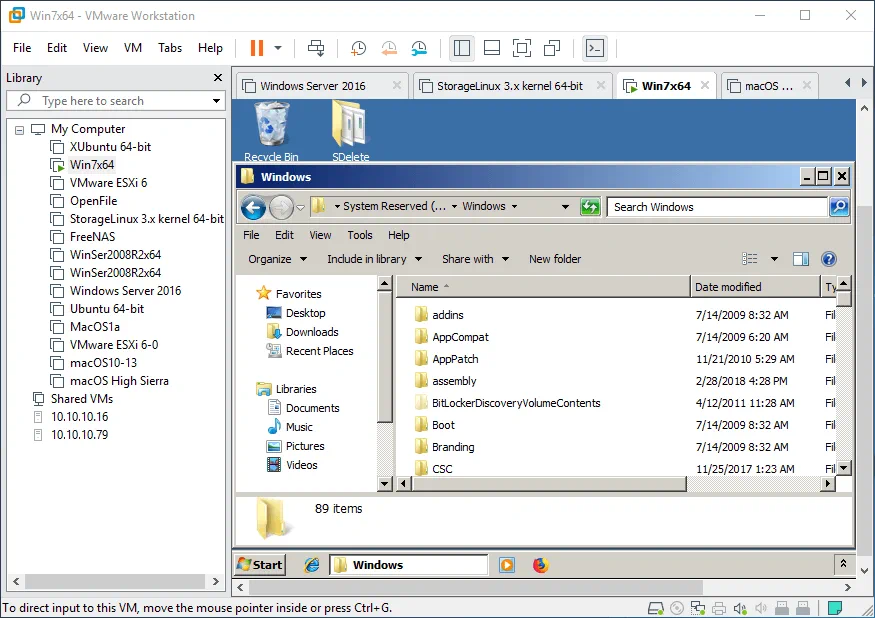
The GUI of VMware Player is shown on the screenshot below. You can compare the interface of VMware Player with the interface of VMware Workstation.

VMware Fusion provides a GUI that differs from Workstation's GUI, because information technology is adopted for macOS users. The tabs to switch between VMs likewise as the left pane with the VM list are missing. The vmrun command-line utility is too available.

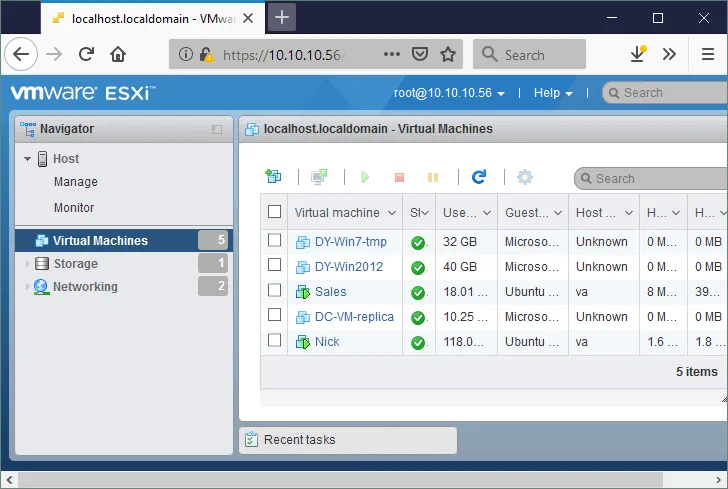
VMware ESXi has a console interface that can exist accessed either straight on the server, or with remote SSH connection. You can use a graphical interface if you connect to the ESXi server with a browser by using VMware Host Client.
Shared Folders
Shared folders allow you lot to conveniently commutation files betwixt a host Os and a guest OS, via the network. You can hands create a shared binder in the host OS with a virtualization application, and then transfer files from a host organization to a guest organisation, or vice versa. Using a shared folders characteristic is more convenient than creating a shared folder manually with the built-in tools of the operating system. Shared folders are available in Oracle VirtualBox, VMware Workstation, VMware Player, and VMware Fusion. There is no Shared Folders feature available for VMs running on ESXi hosts – you lot accept to create a shared binder manually on a physical or virtual machine with the built-in tools of the OS. VirtualBox Guest Additions and VMware Tools must be installed on the invitee Os to enable shared folders appropriately.
VirtualBox Invitee Additions vs VMware Tools
VirtualBox Guest Additions is a fix of drivers and organization applications for invitee operating systems, which can exist used to amend VM operation and usability. Guest Additions are provided for all supported invitee operating systems, as the VBoxGuestAdditions.iso file is located in the directory where VirtualBox is installed. In order to install Guest Additions, you lot should mount the ISO epitome to the virtual DVD drive of the VM, and run the installer. The ISO images of different versions can be downloaded from VirtualBox'southward site. Yous can utilise a command line package manager to install Guest Additions on Linux systems from software repositories.
VMware Tools is the analog of VirtualBox Guest Additions for virtual machines that are running on the VMware platform. VMware Tools are provided for each supported guest Os every bit a dissever ISO paradigm (windows.iso, linux.iso, solaris.iso, etc.) that is located in the directory of the awarding (VMware Workstation, Histrion, Fusion). Equally for ESXi, VMware Tools tin can be located in the /usr/lib/vmware/isoimages/ directory. If y'all cannot observe the appropriate ISO images, y'all can manually download the VMware Tools installer from the VMwareְ's site; or you can use a command line packet manager to install open-vm-tools from software repositories for your Linux guest operating systems.
Later on installing VirtualBox Guest Additions or VMware Tools, the post-obit features become available: Shared folders, Elevate & Drop, Shared Clipboard, Integrated mouse arrow, Autologon, better video output, time synchronization, etc.
VirtualBox Seamless Fashion vs. VMware Unity
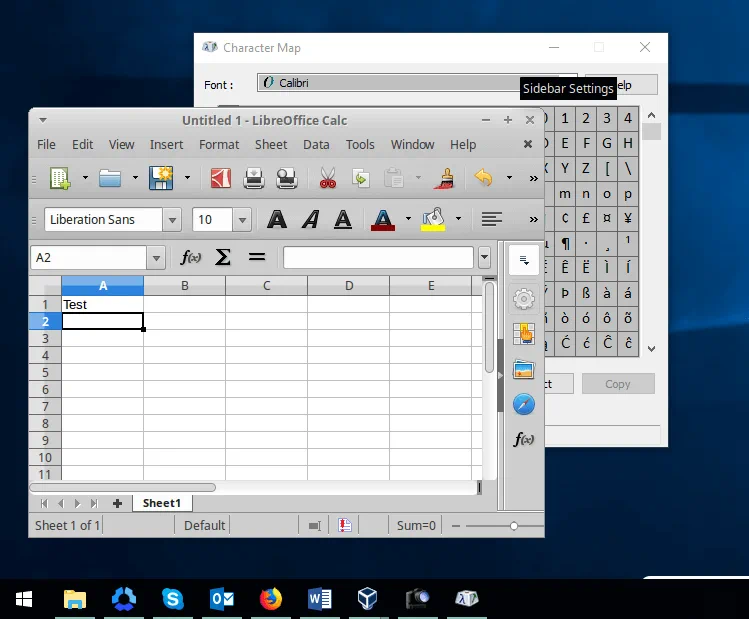
VirtualBox Seamless mode and VMware Unity are the equivalent features that allow you to display windows of guest applications, similarly to how windows of host applications are displayed.
More often than not, the windows of guest applications that are running on the guest OS are displayed in a unmarried window of the VM. The VM window vanishes after enabling the Seamless style or Unity manner. Programs that are running on the invitee Os await similar the programs that are running on the host Os. Security is non violated by this, considering the programs continue to run on the isolated VM.
Using invitee applications without a VM window makes the workspace more integrated and convenient. For example, you can run Photoshop on your Windows VM, enable VirtualBox Seamless mode/VMware Unity style, and so operate with the window of Photoshop similarly to how you lot operate with regular windows of your Linux host Bone.
VirtualBox Guest Additions are required for using the Seamless mode, and VMware Tools are required when using the VMware Unity manner appropriately. The Unity style cannot exist used for remote VMs that are running on ESXi hosts.
VirtualBox supports the Seamless mode for Linux, Windows, and Solaris guests (macOS is not supported).
VMware supports the Unity mode for Windows and Linux guests (unfortunately, the support of the Unity manner in Linux guests was removed in VMware Workstation 12). Unity for macOS guests is not supported.
VM Snapshots
Snapshots permit you to salvage a VM state for a particular moment in fourth dimension. Both VirtualBox and VMware products (except VMware Player) support VM snapshots. You can create multiple snapshots, and then roll dorsum a VM to one of the snapshots in club to restore the VM state. A VM tin either be powered off or powered on when a snapshot is taken. When a snapshot of the running VM is taken, the virtual retentiveness is also saved to a file.
When yous accept a snapshot, a differencing virtual deejay is created; and from that particular moment, all changes are written to that differencing virtual disk. When you lot take the next snapshot, another differencing virtual disk is created. You can take multiple snapshots, but be enlightened that snapshots slow down the operation of the VM.
When a snapshot is deleted, the differencing virtual disk is merged with a parent virtual disk (the differencing virtual disk of the previous snapshot can also exist considered as a parent virtual disk).
Snapshots are useful for testing. For example, if you do not know whether the application would piece of work properly after installation, have a snapshot before installing the application. Thus, if something were to go wrong, you can revert a VM country to the snapshot. The VM cannot exist running in order to restore from a snapshot.
Practice non consider snapshots every bit backup. Utilize NAKIVO Backup & Replication to back up your VMs running on ESXi servers.
USB Devices Back up
With USB devices support, you can adhere a USB device to a host machine and connect the USB device to a guest machine. This characteristic is useful for attaching USB hard disk drives, web cameras, WI-FI adapters, printers, scanners etc. to the VM. A virtual USB controller must exist enabled for the virtual machine.
VirtualBox and VMware platforms (including VMware Player, Workstation, Fusion, ESXi) support the connecting of USB devices to virtual machines. You lot can apply VM options for removable devices to connect/disconnect a USB device from host to guest.
The closed source Extension Pack must be installed in VirtualBox for USB 2.0/iii.0 support, and VirtualBox Invitee Additions are required. VMware provides USB devices back up out of the box.
3D Graphics Support
Some software, such as applications for creating and rendering 3D models, may need 3D dispatch support.
VirtualBox has limited support for 3D graphics (up to OpenGL 3.0, Direct3D 9). 3D dispatch must exist enabled in the VM settings manually. A maximum 128 MB of video memory is supported. Graphics drivers must be installed on the host machine, and VirtualBox Guest Additions must exist installed on the guest automobile.
VMware provides 3D graphics with DirectX 10 and OpenGL iii.three support for Player, Workstation, Fusion and ESXi. 3D acceleration is enabled by default for the latest versions of Workstation VMs. VMware Tools are required. You can set up to 2 GB of video retention. Graphics drivers must be installed on the host Bone and hardware acceleration must be enabled.
Generally, in this category, VMware provides better 3D graphics back up for guest VMs.
Virtual Disk Format
Virtual disks are emulated like other virtual hardware for virtual machines. Virtual disk files, which represent special containers for property data, are fastened to the VMs.
VirtualBox supports for the post-obit virtual disk formats:
- VDI (Virtual Deejay Image) is a native VirtualBox format of virtual disks. This format is used by default when you create a new VM in VirtualBox.
- VMDK (Virtual Machine DisK) is a virtual disk format developed by VMware, and is used for VMware virtual machines. Other vendors besides utilize this format.
- VHD (Virtual Hard disk drive) is a virtual disk format developed by Microsoft for Hyper-5.
- HDD virtual disk images of Parallels Desktop 2 format (is pop on macOS).
VMware supports a VMDK format of virtual disks for virtual machines. This is the but virtual disk format supported by VMware.
Virtual Disk Allocation Type
When you create a virtual disk, there are two types of disk allocation that you lot can use:
Yous tin can pre-allocate the entire space at the moment of cosmos. For instance, if y'all create a 10GB virtual disk, the virtual disk file would consume 10 GB of space on storage right afterward creation. In VirtualBox such disks are called fixed disks, while in VMware such disks are called thick provisioned disks.
You can create a dynamically allocated virtual disk file that is able to abound as data is written to the disk. This type of virtual disk is very small at the moment of creation, and gradually grows every bit data is written onto new blocks, until the disk size reaches the maximum provisioned size. The disks of this blazon are chosen dynamically allocated disks in VirtualBox, and thin provisioned disks in VMware. Read the web log post about thick and thin provisioning to learn more.
Back up of Linked Clones
A linked clone is a virtual automobile that has a virtual disk linked to another virtual deejay of some other VM. Information technology only saves data that differs from the data that is stored on a disk of a linked (parent) virtual machine. For example, you can create a basic VM with updates and software installed on it. So, you can create multiple linked clones and install unlike specialized software on each linked clone that would exist used for each appropriate purpose. This arroyo allows you to save storage space because only the differences are written to the virtual disks of linked the clones. Furthermore, information technology allows you to save time spent on the clone cosmos. A snapshot is created automatically for a basic VM when you create a linked clone, which is so used as a base for the linked clone. A linked clone must always take admission to a parent VM.
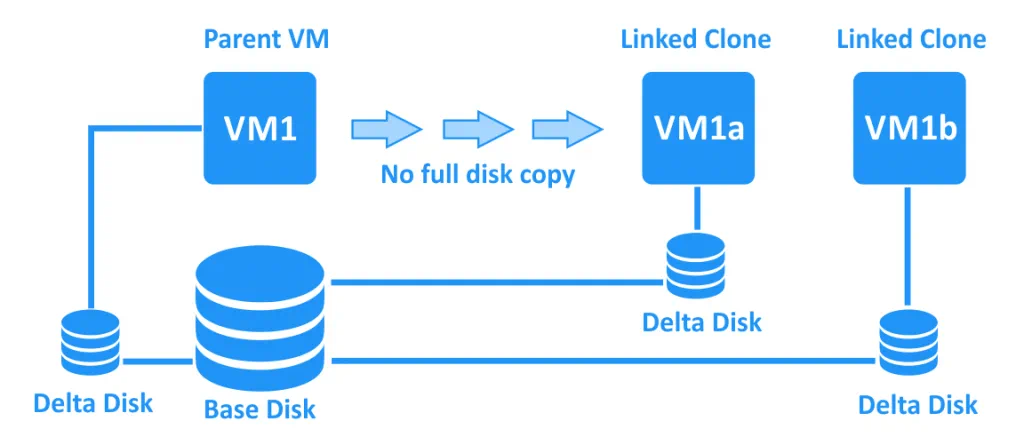
Linked clones are supported by VirtualBox, VMware Workstation, VMware Fusion Pro. As for VMware ESXi, you tin create linked clones manually past writing special scripts for PowerCLI. VMware also provides linked clones for VMware Horizon VDI (a virtual desktop infrastructure solution that works with vSphere).
Virtual Networks
VirtualBox provides the following network modes:
Not attached. In this mode a virtual network adapter is enabled for a VM, but an unplugged network cablevision is emulated. As a result, the VM has no network connection.
NAT (Network Accost Translation). This style allows y'all to enable a individual network for a VM behind a virtual router, which is integrated into a VirtualBox engine. A guest machine can access the host auto and other hosts in the network to which the host machine is continued. A guest machine can also admission external hosts and has Internet admission (similar to that of the host machine). The VM is unreachable from a host automobile and external networks (you can manually configure port forwarding to fix this). An integrated DHCP server is used for assigning IP addresses to VM network adapters. NAT is a default-networking manner that is used when a VM is created.
NAT Network (Service). This mode is more than advanced than the NAT mode explained above, and allows VMs in the NAT Network (behind the NAT) to admission each other over the network. Exercise not forget to create a virtual network past going to File > Preferences > Network for configuring NAT network. Y'all should manually configure port forwarding if y'all want to enable network access to VMs from a host motorcar.
Bridged adapter. In this style, a VM connects to the aforementioned network as a host auto does. In this case, a VM looks similar a physical machine connected by using a network cable to the aforementioned switch as a host auto. Different techniques of bridging are used for wired and wireless network adapters of host machines.
Internal network. This mode allows VMs to connect with each other. In this case, a networking scheme looks as if virtual machines are connected to the switch, and the switch is non connected to any routers or physical machines.
Host-only adapter. VMs tin can communicate with each other and with a host car, while the host tin can access guest VMs via network. The VirtualBox Host-Only network adapter is created in the host OS.
Permit's compare network modes for VirtualBox VMs in the table:
| VM -> Host | VM <- Host | VM1 <-> VM2 | VM -> LAN | VM <- LAN | Virtual network adapter in host OS | |
| NAT | + | Port forwarding | - | + | Port forwarding | - |
| NAT Network | + | Port forwarding | + | + | Port forwarding | - |
| Bridged adapter | + | + | + | + | + | - |
| Internal network | - | - | + | - | - | - |
| Host-simply adapter | + | + | + | - | - | + |
*LAN is a physical local area network to which a host machine is continued.
VMware provides the following VM networking modes: Bridged, NAT, and Host only. These modes are available for VMware Player, Workstation, Fusion, Fusion Pro. VMware Workstation and Fusion Pro include a virtual network editor, while Role player and Fusion practice non.
NAT. In this way, virtual machines are connected to a private network behind the NAT. The VMs are able to communicate with each other, a host automobile and other hosts with which the host machine can communicate outside the VM NAT network. A host motorcar tin can communicate with VMs, merely other hosts outside of the NAT network cannot communicate with such VMs in this style. A default name for the NAT network is VMNet8. A virtual network adapter is added to the host operating system when a NAT network is added. A built-in virtual router and DHCP Server are used past VMware products in order to establish the NAT network connection for VMs.
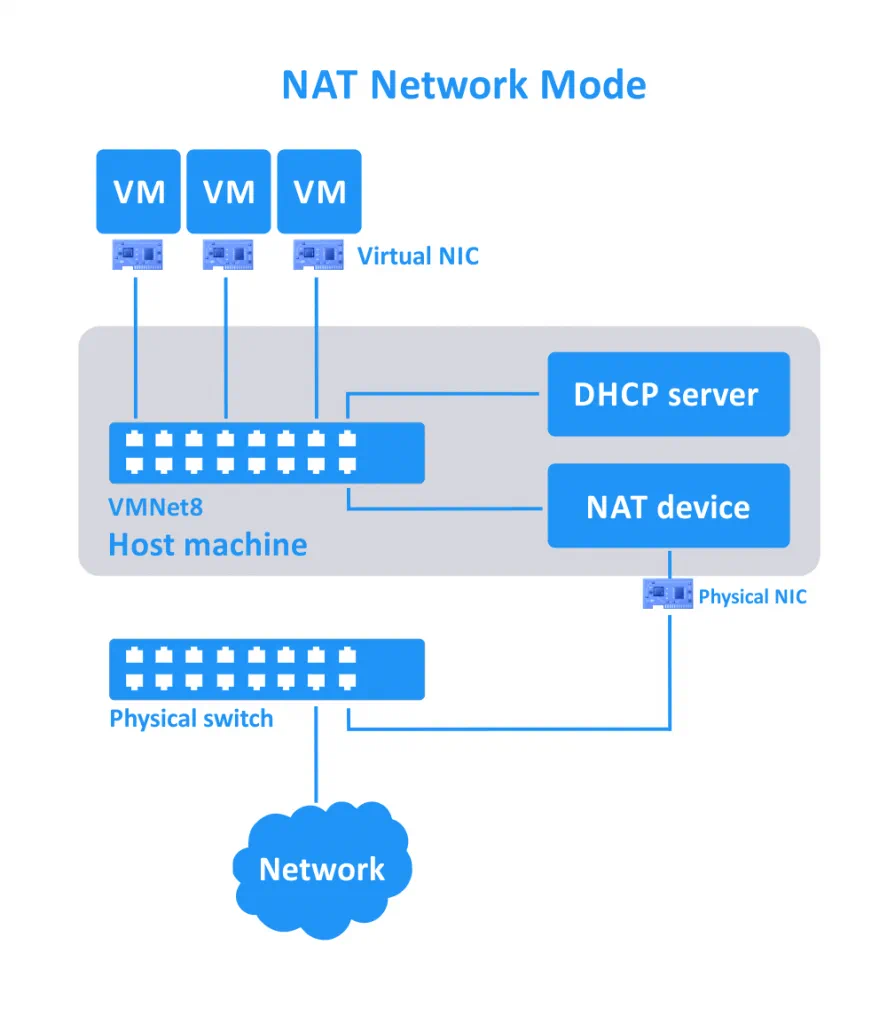
The working principle of NAT networking for VMware VMs is similar to the NAT Network manner in VirtualBox. Withal, y'all practice not demand to manually add port forwarding rules (except if yous need to connect from whatsoever hosts of your physical LAN to the VM).
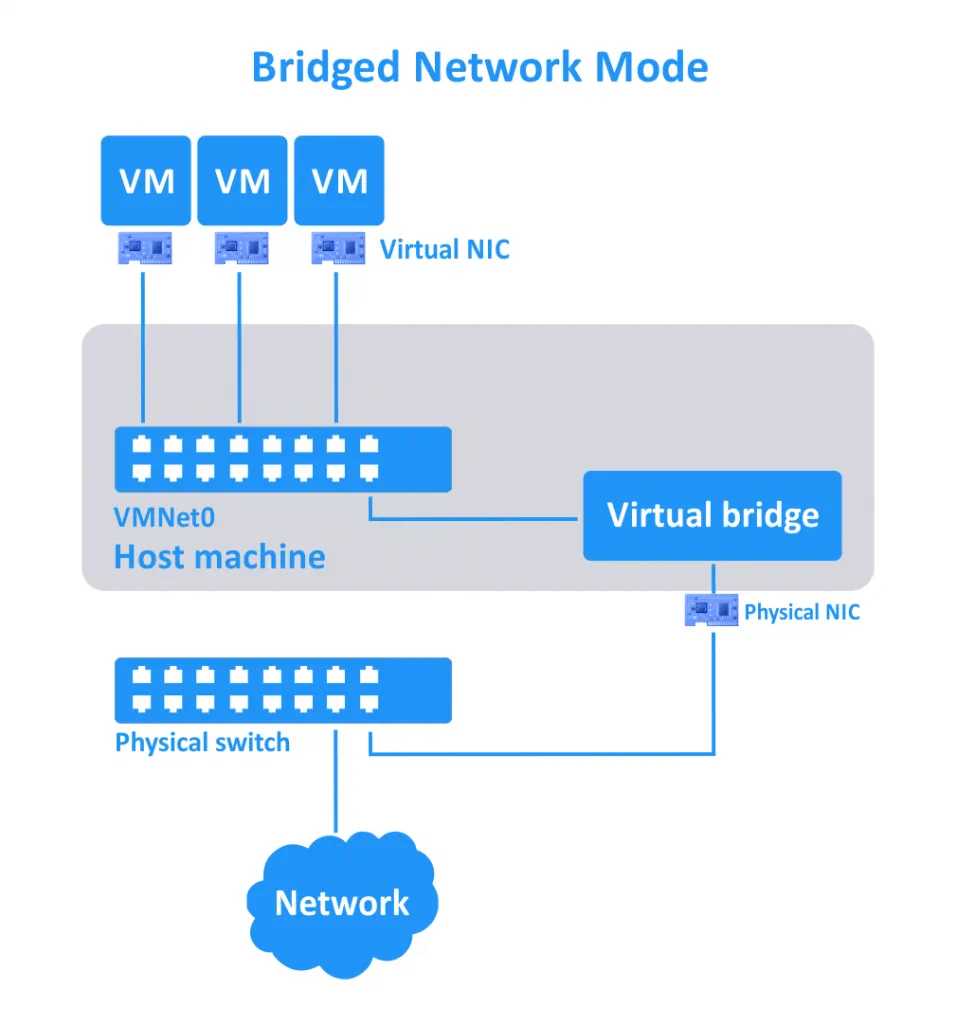
Bridged. This way makes your VM piece of work similarly to any other motorcar in your concrete network. The working principle is similar to the working principle of the bridged connection for VirtualBox. A default name of the bridged network is VMNet0.
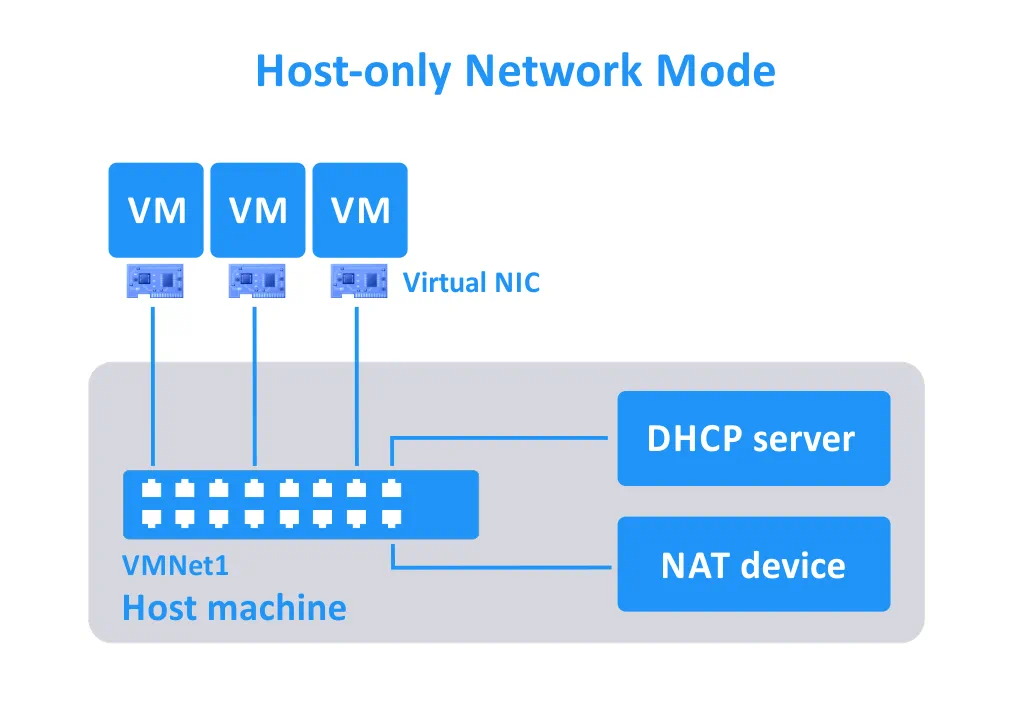
Host-simply. In this mode VMs are connected to an isolated network, and can communicate with each other as well as with a host. A host tin can communicate with VMs. A connexion scheme looks as if the VMs and the host are connected to the same switch, and the switch is not connected to any router (similarly to VirtualBox). A virtual network adapter is created in the host OS, and the default name of this network is VMNet1. A virtual DHCP server is included with VMware products in order to assign IP addresses to VM network adapters that are connected in the Host-only fashion.
You can add, edit, and delete the virtual networks in the virtual network editor (including a network address, the IP address of the router, settings of the DHCP Server, etc.). The maximum number of VM networks is 20 (VMNet0 to VMNet19).
Network modes provided past VMware are compared in the table:
| VM -> Host | VM < Host | VM1 <-> VM2 | VM -> LAN | VM <- LAN | Virtual network adapter in host Os | |
| NAT | + | + | + | + | Port forwarding | + |
| Bridged | + | + | + | + | + | - |
| Host simply | + | + | + | - | - | + |
VMware ESXi includes slightly different tools for connecting VMs to networks. The default VM network connexion method is similar to the bridged mode. The virtual network adapter of a VM connects to a port of a default vSwitch, which is connected to a concrete switch by using the concrete network interface controller (NIC) of the ESXi host. Multiple port groups can be created on the vSwitch. You can set VLAN IDs for different port groups of a virtual switch, and so (by using L2 switches) connect them to a physical or virtual router. The VMs that accept virtual network adapters that are connected to these ports, are connected to the advisable networks. VMware provides NSX for virtualizing routers as well as building software defined networks (SDN), however this topic is out of the scope of this article. Read more than about virtual switches and ESXi networking past reading this weblog post. The maximum number of virtual network adapters per VM is 4 for VirtualBox, and 10 for VMware.
Shared Storage (iSCSI) Support
iSCSI is a popular network protocol that is used to access shared storage on a block level. iSCSI storage is user-friendly to attach as a remote disk by using an Ethernet network. Y'all cannot see whatsoever divergence from the guest Os of the VM. A server that provides shared storage is called an iSCSI target, while a customer who initiates a connection to the server is called an iSCSI initiator. Using shared iSCSI storage as a virtual disk for a VM is especially useful when you need to drift the VM between hosts. A VM uses the same shared iSCSI target to shop a virtual deejay, merely consumes the computing resource of another host after migration.
VirtualBox includes a built-in iSCSI initiator. A command line must be used to connect an iSCSI target to a VM in VirtualBox. Later on attaching the iSCSI target to a VM, the internal VM files are stored directly onto the iSCSI disk. No virtual disk file is created in this case.
VMware ESXi supports the zipper of an iSCSI target to be used as a datastore for storing VM files, including virtual disks. The main difference with VirtualBox is that VirtualBox VMs only use iSCSI targets straight without creating virtual disks, while ESXi uses iSCSI targets as datastores to store virtual disk files of VMs. It is recommended that you configure a dedicated storage network for attaching iSCSI targets to ESXi hosts. You can utilize raw device mapping (RDM) to shop the data of VMware VMs straight onto the iSCSI disk, bypassing the virtual disk file; however, be aware that the VM performance is not increased in this example.
VMware Workstation, Thespian, and Fusion do not back up iSCSI, and practice not have an iSCSI initiator. The only fashion to store virtual disks on an iSCSI storage is through connecting an iSCSI target by using the congenital-in iSCSI initiator of the host operating arrangement (if such initiator exists in the OS), and then using the mounted deejay to store the virtual disk files for VMs.
VirtualBox besides supports NFS and SMB shared storage, while VMware ESXi supports NFS and Fibre Channel storage. NFS and SMB (CIFS) are file-level access protocols.
VM Live Migration – VirtualBox Teleportation vs. VMware vMotion
VirtualBox supports VM live migration from one VirtualBox host to another over the TCP/IP network, fifty-fifty if the VM is running. This feature is called Teleportation in VirtualBox. A shared storage (iSCSI, NFS or SMB) must be used for a virtual deejay, and must be accessed past both VirtualBox hosts. A virtual disk is not migrated from one host to another, rather, a state of the VM is transferred - with minimal downtime if the VM is running. Equally a issue, the VM consumes the computing resources (CPU, Memory) of the target host, but not resources of the source host. A VM can exist migrated betwixt hosts regardless of the host Os; for instance, a VM can be migrated from a Linux host (source) to a Windows host (target).
Another requirement is the configuration of a VirtualBox VM on a target host. A VM with hardware settings that are identical to the hardware settings of the source VM must be created (amount of virtual retention must be the aforementioned). The VM names may be different. A command line interface (VBoxManage) must exist used to perform VM Teleportation between VirtualBox hosts. Using processors of the same family unit on VirtualBox hosts is recommended for maximum compatibility.
VMware provides the vMotion feature for migrating VMs between ESXi hosts in vSphere over network, and without downtime if the VMs are running. VM workloads (CPU and memory) are transferred seamlessly, thus, as a result the services and applications of the VM are not interrupted. Virtual disks are not migrated when vMotion is used. Storage vMotion is used for migrating virtual disks from one datastore to another.
The primary requirements are: vCenter Server, a shared datastore that is accessible by both ESXi hosts, and processors of the same family on ESXi hosts. Unlike VirtualBox Teleportation, you lot do not need to create a new empty VM for live migration of VMware VMs with vMotion. It is recommended that you lot use a defended network for vMotion. You tin perform vMotion past using the graphical user interface of VMware vSphere Client or with PowerCLI.
VMware Player, Workstation, and Fusion do not back up any VM live migration features such as vMotion.
Interface for Centralized (and Remote) Management
PhpVirtualBox is a web interface that is like to the standard interface of VirtualBox. Information technology allows you to manage remote VirtualBox instances with a web browser. PhpVirtualBox is written on PHP and is a free open source solution. PhpVirtualBox and VirtualBox do non have to exist installed on the same motorcar, every bit the communication between them is performed over the network. Equally a consequence, you can deploy PhpVirtualBox to manage multiple VirtualBox instances installed on different hosts (even if a host OS doesn't accept GUI).
VMware provides vCenter Server for the centralized management of ESXi hosts and other components of vSphere. Yous tin connect to vCenter with VMware vSphere Customer or VMware vSphere Spider web client (both take GUI). VMware promotes vSphere Web client, which tin can be accessed with a web browser and recommends the use the vSphere Web Customer. VMware vSphere Customer is a standalone application that can be installed on Windows. If you lot exercise not have vCenter Server, you tin can manage standalone ESXi hosts by using VMware Host Client in a browser, or past using VMware vSphere Customer (Windows application). VMware too provides a PowerCLI, which is a command line interface (CLI) for managing ESXi hosts and vSphere with vCenter. PowerCLI is a collection of cmdlets for Windows PowerShell.
VM Encryption Support
VirtualBox has a built-in encryption feature that allows you to encrypt the virtual disk of a VM. Configuring VM encryption is non difficult: you should select the encryption cypher (XTS-AES-256 or XTS-AES-128) and enter a password in the VM settings. VM deejay encryption may accept some time, depending on the size of the virtual disk. You are required to enter a password when you power on an encrypted VM. Virtual disk encryption is transparent for a guest Bone. Later, yous can disable encryption in VM options if needed. VirtualBox Extension Pack must be installed in order to enable VM encryption options.
VMware also provides VM encryption/brake options, which are different for each VMware product. Similarly to VirtualBox, the virtual disks of VMware VMs can be encrypted. If y'all ready an expiration appointment for a VM, users are able to use the VM until the expiration engagement comes. Thereafter, administrator has to enter the countersign used for the VM encryption in order to reset or prolong VM restriction options.
VMWare Player. VMs cannot be encrypted with VMware Player, but VMware Actor can play already encrypted VMs (a commercial license is required in this instance).
VMware Workstation allows yous to configure VM encryption – y'all can enable or disable encryption, edit already encrypted or restricted VMs, besides as ready the expiration date for the encrypted VM. All encryption and brake features are available. AES-256 encryption algorithm is used to encrypt virtual deejay files of VMs.
VMware Fusion. Yous tin enable and disable encryption for VMs that take non been encrypted yet. The only change that tin be fabricated is that of the password – if the VM was previously encrypted/restricted with another VMware production (other encryption and restrictions settings are read-only for VMware Fusion). If these options are not sufficient for you, consider using VMware Fusion Pro.
VMware Fusion Pro. Yous can enable, disable, and edit encryption settings for VMs that already have restrictions enabled. All encryption and restrictions options are bachelor for VMs through the use of VMware Fusion Pro.
VMware ESXi. There are more encryption options available for virtual machines and VM files if y'all utilize ESXi hosts with vCenter in vSphere. You lot tin can encrypt VM files (VMDK, NVRAM, VSWP, VMSN) or virtual disks (VMDK). XTS-AES-256 algorithm is used for the creation of data encryption keys (DEK); and AES-256 is used for creating cardinal encryption keys (KEK). A Primal Management Service (KMS) is used to provide keys for vCenter. VMware vSphere customer must be used to encrypt detail VM files. Log files, VM configuration files (VMX, VMSD), and virtual deejay descriptor files are not encrypted.
Memory Ballooning
Retention Overcommit (besides chosen Retention Ballooning) is a memory reclamation technique that allows a host to remember the unused memory from sure running VMs, and to redistribute this retentiveness to running VMs that need more retentivity. This characteristic is activated when the host is running out of physical memory. A host cannot use the retentivity retrieved from VMs for its ain tasks.
A hypervisor creates a special driver locked ballooning process, which simulates the consumption of a part of the VM memory. This procedure prevents the utilize of this part of retention by other guest applications, while a hypervisor can redistribute the ballooned memory to other VMs. For example, if a host has 16 GB of physical memory, Memory Overcommit allows you to run 3 VMs that are configured to use 6 GB of memory for each VM in the VM settings (3x6=18>sixteen). If a guest VM with retention filled past the ballooning process needs additional memory, a swap file is used past a invitee Bone.

VirtualBox supports retentiveness ballooning. This feature can but exist configured with VBoxManage in the control line. VirtualBox Invitee Additions must exist installed on the VMs for the use of memory ballooning because a special driver that is a part of Guest Additions is required. Memory ballooning is but supported on 64-bit hosts, and is non supported on macOS hosts.
VMware provides retentiveness ballooning for VMware Workstation, Fusion, and ESXi. Unlike VirtualBox, this characteristic can exist configured by using GUI. VMware Tools are required because they contain a special vmmemctl.sys balloon driver.
Clustering Technologies
Unfortunately, VirtualBox doesn't provide clustering features at this time.
VMware provides the ability to deploy two types of clusters by using ESXi servers and vCenter in vSphere: a High Availability (HA) cluster and a Distributed Resource Scheduler (DRS) cluster. The HA cluster can perform VM failover in a case of hardware failure of ESXi hosts, while ensuring minimal downtime. The DRS cluster provides the rational consumption of hardware resources by VMs, and tin initiate migration of VMs from the overloaded ESXi host to a host with free calculating resources. VMware also provides Fault Tolerance, which is a bully feature for the HA cluster, and helps you perform VM failover without reanimation in a case of hardware failure. Acquire more about VMware clustering by reading this due east-book.
VMware Player, Workstation, and Fusion don't support clustering.
Providing API for Developers
VirtualBox provides a powerful API (awarding programming interface) for developing applications that collaborate with VirtuaBox; while also making the integration of created applications easier and more convenient. Oracle also provides VirtualBox SDK (software evolution kit).
VMware provides different APIs and SDKs for developers, including the ability of the integration of development and testing tools, such as Eclipse. You can ready upward Eclipse Integrated Virtual Debugger Environs for VMware Workstation by using the Eclipse plugin. VMware also provides VMware Studio - a free development tool for building vApps and virtual appliances.
Summary Tabular array
Now when main VirtualBox and VMware features have been explained and compared, here is a summary table with the about important characteristics of the considered virtualization products.
| Oracle | VMware | |||||
| VirtualBox 5.2.22 | Player 15 | Workstation xv | Fusion 11 | Fusion Pro 11 | ESXi 6.7 | |
| Hypervisor Type | 2 | two | 2 | 2 | 2 | i |
| Licensing | Free | Free | From 250 $ | eighty $ | 160 $ | Free/Paid (from 495$) |
| Virtualization | Hardware + Software | Hardware | Hardware | Hardware | Hardware | Hardware |
| Host Bone | Linux, Windows, Solaris, macOS, FreeBSD | Linux, Windows | Linux, Windows | macOS | macOS | --- |
| Guest Bone | Linux, Windows, Solaris, FreeBSD, macOS | Linux, Windows, Solaris, FreeBSD | Linux, Windows, Solaris, FreeBSD | Linux, Windows, Solaris, FreeBSD, macOS | Linux, Windows, Solaris, FreeBSD, macOS | Linux, Windows, Solaris, FreeBSD |
| Shared Folders | Yes | Yeah | Aye | Yes | Yes | No |
| Seamless mode/Unity | Yep | Yes | Yes | Yes | Yes | No |
| VM snapshots | Yes | No | Yes | Yes | Yes | Yes |
| USB for VMs | With Extension Pack | Out of the box | Out of the box | Out of the box | Out of the box | Out of the box |
| 3D graphics in VMs | DirectX 9, OpenGL 3.0 | DirectX 10, OpenGL 3.3 | DirectX 10, OpenGL three.3 | DirectX ten, OpenGL three.3 | DirectX 10, OpenGL three.3 | DirectX 10, OpenGL 3.3 |
| Max.VM video retentivity | 128 MB | 2 GB | ii GB | 2 GB | 2 GB | 2 GB |
| Virtual Disk Format | VDI, VMDK, VHD, HDD* | VMDK | VMDK | VMDK | VMDK | VMDK |
| Linked clones back up | Yeah | No | Yep | No | Yes | No* |
| Shared storage support | iSCSI, NFS, SMB (CIFS) | No* | No* | No* | No* | iSCSI, NFS, Fibre Aqueduct |
| VM Live Migration | Yeah (Teleportation) | No | No | No | No | Yes (vMotion) |
| Centralized Management | PhpVirtualBox | No | No | No | No | vCenter |
| VM Encryption | Yes, with Ext. Pack | Yes (limited) | Yes | Yes (express) | Yes | Yes |
| Retentiveness Ballooning | Yes | - | Yes | Yes | Yes | Yes |
| Clustering | No | No | No | No | No | Yes |
Decision
VirtualBox and VMware are the top two virtualization platforms on market place, which makes it difficult to choose betwixt the products. The most important VirtualBox and VMware features have been explained and compared in this blog post to assist you brand a pick that is right, and that suits you all-time. There are some recommendations yous can refer to:
- If y'all need a free virtualization solution for a desktop, y'all tin select VirtualBox.
- If you need to take a free virtualization solution for running VMs on a server, select VirtualBox or VMware ESXi Free Edition.
- If yous need an ultimate solution for desktop with extended 3D graphics back up and a wide list of settings, select VMware Workstation (or VMware Fusion for Mac computers).
- If you demand a gratis virtualization solution that just needs to run VMware VMs on desktop with bones options, you tin can select VMware Player.
- If yous need maximum integration between a VMware desktop solution and a VMware vSphere (vCenter server, ESXi hosts), select VMware Workstation or VMware Fusion Pro. You can use VMware Workstation or Fusion Pro for connecting to vCenter Server or ESXi host remotely, and can manage virtual machines residing on these resources. VMware provides a free VMware vCenter Converter for converting VMs of the Workstation format to VMs of the ESXi format (and vice versa).
- If yous take an quondam reckoner with a processor that does not back up hardware virtualization technologies, select VirtualBox, which provides software virtualization.
- If you need the ultimate enterprise-grade solution for deploying multiple servers, running a high number of VMs, using clustering features, etc., select VMware vSphere based on ESXi servers with vCenter.
Both VirtualBox and VMware provide performance and loftier reliability. The final decision is up to you. Evaluate which features and advantages are vital for your infrastructure, and select the almost suitable production. If you want to learn more virtually virtualization solutions, you tin can also compare VirtualBox with Hyper-V.

Source: https://www.nakivo.com/blog/vmware-vs-virtual-box-comprehensive-comparison/

Post a Comment for "Reading a Vmware Ivrtual Machine With Virtual Box"